SALUZ Insight #001
The Missing Competency
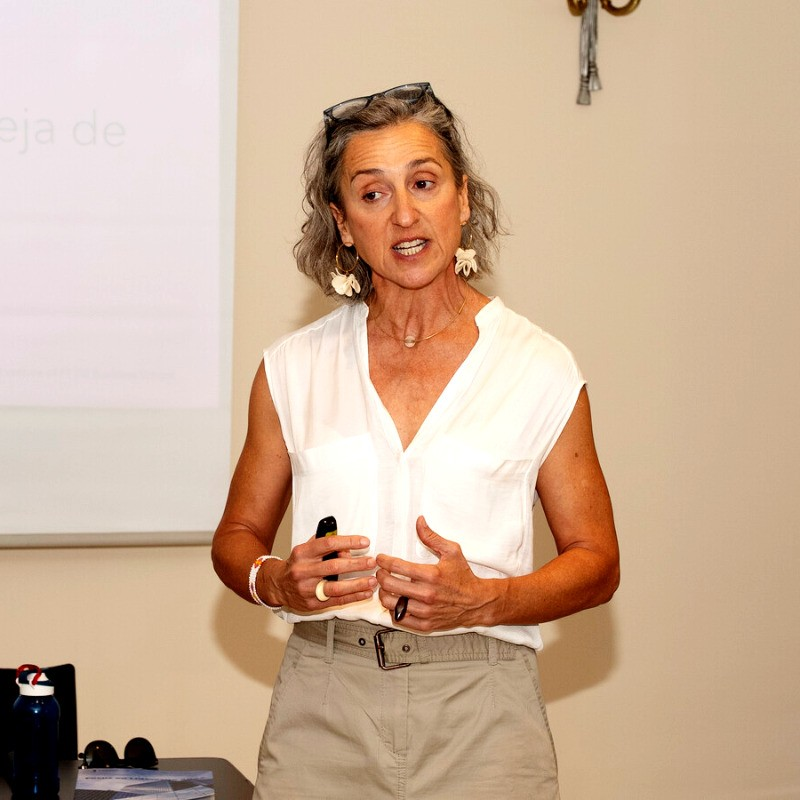
By Virginia Bombín · Founder & Academic Director
Organizations don't achieve goals. People do.
#001
SALUZ Insight
We would never expect someone to master Corporate Finance without studying it. Yet we routinely expect professionals to manage the most complex system they will ever own—their brain and body—without ever learning how they work.
For almost three decades, I have taught Corporate Finance to executives, consultants and senior leaders from very different industries and countries. One of the first ideas we discuss is that sound economic decisions require a clear understanding of the relationship between risk and return. Expected returns cannot be assessed in isolation; they only make sense in relation to the risks required to achieve them.
Over time, one question became increasingly difficult for me to ignore: Who actually delivers organizational performance?
The obvious answer is "organizations". But organizations are, ultimately, an abstraction. Every strategic objective is translated into thousands of individual decisions, conversations and actions. Organizations do not innovate, build trust or lead teams through uncertainty. People do.
That realization led me to wonder whether we apply the same risk-return logic to the people on whom organizational performance ultimately depends.
If organizations depend entirely on people to achieve their goals, why do we devote so little attention to understanding the biological system that enables people to perform at their best?
This is no longer simply a philosophical question. Over the past two decades, research across neuroscience, sleep science, nutrition and exercise physiology has substantially expanded our understanding of how biological factors can influence attention, learning, memory, executive function and emotional regulation—in other words, many of the capabilities organizations invest so heavily in developing.[1–6]
To me, the question is no longer whether biology matters at work, but whether understanding human biology should become part of professional development.
An Overlooked Assumption
The more I reflected on this question, the more I realized that the issue might not be a lack of evidence. It might be an assumption we have rarely challenged.
Maslow's hierarchy of needs offers a familiar analogy. His theory placed physiological needs among the most fundamental human needs, with higher-order needs emerging within a broader hierarchy.[7] We tend to think of higher-order human capabilities as resting on more fundamental needs. Yet in executive education, we have largely concentrated our efforts at the top: developing leadership, judgment, communication, creativity, strategic thinking and, increasingly, the ability to work with artificial intelligence.
And rightly so. These capabilities matter.
But in doing so, we may have implicitly assumed that the biological foundation beneath them will simply take care of itself—or, more precisely, that people somehow know how to manage it.
This is a curious assumption. We would never expect someone to understand finance, strategy or leadership without learning about them. Yet when it comes to sleep, nutrition, physical activity or recovery, we tend to assume that experience alone is enough. We sleep every day, we eat every day and we move every day. But familiarity does not necessarily translate into understanding—let alone knowing how to manage our biology to sustain performance while reducing the risks that can compromise it.
We may have confused familiarity with knowledge.
And this matters because professional performance does not exist independently of biology. Every capability we seek to develop is ultimately expressed through the same biological system. Sleep, nutrition, physical activity and recovery can influence aspects of cognition, mood and physiological functioning relevant to performance.[1–6] Yet these factors have largely remained outside the traditional boundaries of executive education, often viewed as matters of personal responsibility rather than as factors that may shape performance itself.
The argument is not to replace what executive education already does well, but to extend its boundaries to include a deeper understanding of the biological system on which professional performance depends.
This, I believe, is the missing competency.
Why It Matters
If professional performance depends, at least in part, on our biological state, then understanding that biology has practical consequences.
The objective is not simply to prevent illness. It is to understand how everyday behaviours can create better—or worse—conditions for the brain and body to perform.
How we sleep affects recovery and cognitive function.[1,2] Dietary patterns may influence aspects of cognitive function.[4] Physical activity can have effects on cognition and brain-related physiology that go well beyond physical fitness.[3,5] And a growing body of research is exploring the relationship between the gut microbiome, metabolism, brain function and aspects of mental health and mood.[6]
None of these factors determines performance on its own. Human biology is far more complex than that. But together they point to something important: our biological state is not entirely fixed. It is influenced, every day, by behaviours and decisions that can be understood and, to some extent, managed.[1–6]
This changes the nature of the conversation. Sleep, nutrition, movement and recovery are not relevant to professionals only when something goes wrong. They may also influence the conditions under which people sustain attention, regulate emotions, learn and perform cognitively.[1–6]
And this is where the organizational implications begin to emerge.
The consequences are not always visible. People can remain at work while health-related limitations reduce their ability to perform. This phenomenon is commonly referred to as presenteeism, although definitions vary across the occupational-health literature.[8]
And its economic implications may be significant. The McKinsey Health Institute, in collaboration with the World Economic Forum, estimates that improving employee health and well-being could generate up to US$11.7 trillion in global economic value, with improved productivity and reduced presenteeism representing the largest share of that estimated opportunity.[9] The World Health Organization estimates that depression and anxiety alone result in approximately 12 billion lost working days every year, at a cost of around US$1 trillion annually in lost productivity.[10]
These figures point to a broader issue. The economic consequences associated with health and biological functioning do not appear only when people become ill enough to stop working. They can also emerge through reduced capacity to perform while people remain at work.[8–10]
Understanding and managing our biology, therefore, may not simply be a matter of health. It may also be a matter of performance.
Extending the Boundaries of Executive Education
While preparing this Insight in September 2026, I reviewed the publicly available open-enrolment executive education portfolios of Harvard Business School, MIT Sloan, INSEAD, London Business School, IE and IESE.[11]
Across these institutions, I found extensive programmes in areas such as leadership, strategy, innovation, artificial intelligence, digital transformation, finance and general management. I also found a growing presence of programmes and initiatives addressing well-being, resilience, self-leadership and human performance. Yet programmes explicitly designed to help executives understand how biological factors such as sleep, nutrition, physical activity, recovery and brain function influence professional performance remain comparatively rare.
This observation is limited to publicly available open-enrolment programmes and does not include custom in-company programmes or internal corporate learning initiatives, where some of these topics may already be addressed.
But I believe another conversation is now emerging alongside it.
Not simply how to improve well-being, but how to understand and develop the biological foundations of professional performance.
Our own conversations with HR leaders, Learning & Development teams and senior executives reinforce this impression. What tends to capture their attention is not nutrition, sleep or brain health as isolated topics. It is the broader realization that we invest extensively in developing professional capabilities while devoting comparatively little attention to understanding the biological system on which performance depends.
The curiosity this perspective generates suggests to me that there is a space that executive education has only begun to explore.
Our ambition at SALUZ Institute is not to redefine executive education. It is to extend its boundaries.
If organizations ultimately achieve their goals through people, and if our capacity to perform is shaped, at least in part, by a biological system that science is helping us understand with increasing precision, then one question seems worth asking: Should understanding the biological foundations of human performance become part of what we mean by executive education?
Evidence & References
- 1. Krause AJ, Simon EB, Mander BA, Greer SM, Saletin JM, Goldstein-Piekarski AN, Walker MP. The sleep-deprived human brain. Nature Reviews Neuroscience. 2017;18(7):404–418. doi:10.1038/nrn.2017.55.
- 2. Diekelmann S, Born J. The memory function of sleep. Nature Reviews Neuroscience. 2010;11(2):114–126. doi:10.1038/nrn2762.
- 3. Chang YK, Ren FF, Li RH, Ai JY, Kao SC, Etnier JL. Effects of acute exercise on cognitive function: A meta-review of 30 systematic reviews with meta-analyses. Psychological Bulletin. 2025;151(2):240–259. doi:10.1037/bul0000460.
- 4. Guo H, Tian Q, Qin X, Luo Q, Gong X, Gao Q. Systematic evaluation and meta-analysis of the effects of major dietary patterns on cognitive function in healthy adults. Nutritional Neuroscience. 2025;28(1):1–17. doi:10.1080/1028415X.2024.2342164.
- 5. Pedersen BK. Physical activity and muscle–brain crosstalk. Nature Reviews Endocrinology. 2019;15(7):383–392. doi:10.1038/s41574-019-0174-x.
- 6. Dinan TG, Cryan JF. Brain–gut–microbiota axis—mood, metabolism and behaviour. Nature Reviews Gastroenterology & Hepatology. 2017;14(2):69–70. doi:10.1038/nrgastro.2016.200.
- 7. Maslow AH. A theory of human motivation. Psychological Review. 1943;50(4):370–396. doi:10.1037/h0054346.
- 8. Støren PG, Grønningsæter H. Do worksite health promotion programs (WHPP) influence presenteeism among employees? A systematic review. Work. 2024;77(1):85–102. doi:10.3233/WOR-220115.
- 9. Jeffery B, Weddle B, Brassey J, Thaker S. Thriving workplaces: How employers can improve productivity and change lives. McKinsey Health Institute; World Economic Forum. 2025.
- 10. World Health Organization. Mental health at work. Geneva: World Health Organization; 2024.
- 11. Author’s review of publicly available open-enrolment executive education programme listings, conducted September 2026. Programme listings accessed September 2026; websites are updated periodically and may not reflect this exact content at a later date.Harvard Business School · MIT Sloan · INSEAD · London Business School · IE · IESE